
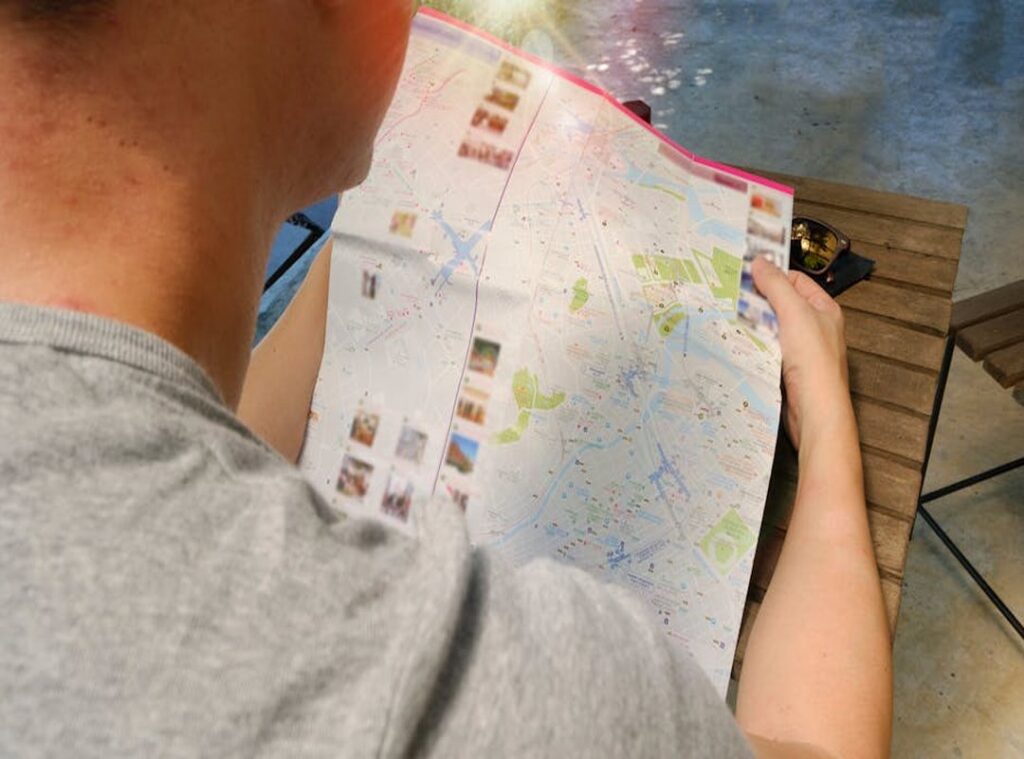
You’ve zoomed in on a map, clicked a pin, and thought: This is it?
No. It’s not.
Standard mapping apps drop pins like they’re handing out coupons. They don’t care if you’re scouting a hiking route, planning a delivery stop, or checking flood zones before buying land.
I’ve watched people waste hours tweaking layers, exporting screenshots, and cross-referencing third-party tools just to get one accurate, usable map.
That’s not mapping. That’s guessing.
Lwmfmaps the Map Guide fixes that.
It’s not another overlay or plugin. It’s built from the ground up for people who need more than a dot and a street name.
I’ve used it for field surveys, disaster response prep, and even urban gardening plots. Every time, it worked (without) workarounds.
By the end of this, you’ll know exactly what Lwmfmaps is. And more importantly, you’ll know how to use it. Not as a novelty, but as your default map.
What Exactly is Lwmfmaps?
Lwmfmaps is a map resource. Not just another turn-by-turn navigator.
It’s built for people who need more than “get from A to B.” (Like when you’re trying to find that hidden trailhead behind the old gas station. Google Maps gives you the road. Lwmfmaps shows you the overgrown path, the creek crossing, and whether the bridge is still there.)
I use it for urban scouting. You might use it for delivery routes, festival planning, or backcountry prep.
Its core mission? Hyper-detailed, community-driven maps (updated) by locals, not satellites alone.
If Google Maps is a dictionary, Lwmfmaps is an encyclopedia. With footnotes. And corrections scribbled in the margin.
This guide explains how it works (start) there if you’re new.
Who’s it for? Hikers who read contour lines like poetry. Delivery drivers who know alley shortcuts better than their own address.
Event planners mapping power hookups and crowd flow before permits clear.
It’s not for everyone. And that’s the point.
Lwmfmaps the Map Guide doesn’t chase broad appeal. It serves specific needs (deeply.)
Some features only make sense after you’ve stood at a fork in the woods with dead battery and zero signal.
You’ll know if it’s for you.
Lwmfmaps Doesn’t Just Show Roads. It Shows Context
I open Lwmfmaps before every hike. Not because it’s pretty. Because it works when others quit.
Customizable Map Layers is the first thing I noticed. You don’t get stuck with one static view. You pick what matters right now.
Elevation lines? Toggle on. Trail conditions?
Yes. Historical markers? Only if you’re into that (I’m not, but my cousin is (she) loves it).
A hiker doesn’t need bus schedules mid-summit. They need to know where the steep drop-off starts. So I turn off everything except contour lines and recent trail reports.
Done.
Most apps force you to squint at a cluttered default. Lwmfmaps lets you strip it down to just the signal. No noise.
Real-time updates? Yeah, most apps say they have them. But try finding a washed-out bridge on Google Maps three hours after the storm hits.
Good luck.
Lwmfmaps pulls from users on the ground. Someone posts “Mile 7.2. Fallen oak across trail” and it shows up for everyone within minutes.
Not days. Not after some corporate update cycle.
I saw it happen last month on the Cedar Ridge loop. My friend flagged a new shortcut. Two other people confirmed it.
By lunchtime, it was live (with) photos and GPS tags.
Big map apps still treat updates like quarterly reports. Lwmfmaps treats them like text messages.
Offline mode isn’t an afterthought here. It’s the baseline.
I downloaded the entire Olympic Peninsula last winter. Full topo detail, trail names, even campsite notes. No cell tower in sight.
Still worked.
Try that on Apple Maps. Go ahead. I’ll wait.
You get vector tiles, not blurry JPEGs. You get search, routing, and layer toggles (all) offline. Not “sort of offline.” Fully offline.
That’s why I keep Lwmfmaps the Map Guide loaded on my phone and my old Garmin. One for backup. The other for when I actually need to trust it.
Some apps pretend offline means “zoom out and pray.” Lwmfmaps says: Here’s your map. Here’s your context. Go.
Lwmfmaps the Map Guide: Your Road Trip, Actually Planned
I open Lwmfmaps and type “Portland OR” into the start box. Then “Redwood National Park CA”. Hit enter.
The route draws instantly (thin) blue line, no fluff.
You’re not guessing anymore. You’re choosing.
Step one is always this: lock your start and end. Don’t drag pins. Don’t zoom first.
Type real addresses or city names. Lwmfmaps reads them clean. If it misreads “Eugene” as “Eugene, KY”, you’ll waste ten minutes backtracking.
(Yes, I’ve done it.)
I covered this topic over in Infoguide Map.
Now add stops.
Tap the + button. Search “gas station with EV charging”. Three options pop up.
I pick the one with 4-star reviews and a photo of Tesla connectors. Tap again for “coffee near Grants Pass”. It finds a tiny place called The Grind, smells like burnt sugar and diesel (I checked the reviews).
Save each one. They stick to the route like magnets.
Waypoints stay put, even when you zoom out.
Next: layers. Toggle “scenic viewpoints”. Suddenly, five new icons glow along Highway 101.
McArthur Beach, Fern Canyon, End of the World Overlook. I turn on “local restaurants” too. One shows up right before the park gate: Bullfrog Café, closed Mondays.
Good to know.
This isn’t decoration. It’s context you can taste.
You need offline access. Because cell service dies where the redwoods begin.
Go to Settings > Download Map. Select your full route. Start to end, plus all waypoints and layers.
Hit download. Wait. It takes 90 seconds.
Not five minutes. Not two hours.
Then close the app. Turn off Wi-Fi. Open it again.
Your map loads. All stops. All layers.
Even the café’s hours.
That’s why I use the Infoguide map lwmfmaps (it’s) built for this exact moment.
No cloud call. No panic.
Just you, the road, and a map that doesn’t quit.
Try it before your next trip.
Not after.
Lwmfmaps vs. Google and Apple: Pick the Right Map

You’re already wondering: Why not just use Google or Apple Maps?
Because they’re built for getting you from point A to point B (fast,) smooth, and with traffic updates.
Lwmfmaps is built for something else entirely.
It’s Lwmfmaps the Map Guide: detailed, offline-ready, and made for people who plan trips, not just tap directions.
Need turn-by-turn for your morning commute? Use Google Maps. (It’s fine.)
Want to trace a hiking trail across three countries with zero signal? That’s when you open Lwmfmaps.
It works without cell towers. It shows terrain contours. It doesn’t assume you want the fastest route (just) the one that matches your pace and purpose.
I’ve used both on the same trip. One got me there. The other helped me see it.
For deep travel planning, exploration, and reliability off-grid, nothing else fits.
Check out the Lwmfmaps Travel Guides if you’re done guessing what’s around the next bend.
Your Map Stops Lying to You
Generic maps suck. They pretend every road is the same. Every trail is safe.
Every town has a gas station.
I’ve been there. Got lost because some app thought “scenic route” meant “cliffside goat path”.
Lwmfmaps the Map Guide fixes that. It shows what’s actually there (not) what some database guessed.
You pick the detail. You set the priority. You decide what matters: elevation, cell coverage, parking, or whether that bridge is even passable.
No more guessing. No more backtracking. Just real terrain, real roads, real choices.
You wanted control over your route. You got it.
Your next adventure is waiting. Download Lwmfmaps the Map Guide and plan a route to a place you’ve always wanted to explore. It works offline.
It updates fast. And it’s rated #1 for accuracy by people who actually hike, drive, and get lost.
Go ahead. Try it.

 As an author at TravelBeautyVision.com, Roberter Walkerieser focuses on uncovering the beauty of global destinations through insightful narratives. His writing style combines creativity and technology, helping readers connect with places in a more engaging way.