

You’re driving. You’ve got your favorite local station on. Then.
Nothing. Just static. No warning.
No explanation.
Why does that happen?
Because the little circle on the FCC map? It lies. It assumes flat ground and perfect air.
Real life has hills, trees, buildings, and weather.
I’ve spent years staring at terrain models, cross-checking FCC filings with actual drive tests, and watching where signals die in real time. From Appalachia to the plains to dense cities. I’ve seen what the maps get wrong.
Lwmfmaps fix that gap.
They don’t guess. They model. They reflect how radio actually behaves (not) how engineers wish it would.
Most people think coverage maps are about geography. They’re not. They’re about uncertainty.
And uncertainty costs time, money, and trust.
Broadcasters overbuild transmitters. Listeners switch stations mid-commute. Planners greenlight projects based on fantasy circles.
This guide cuts through the noise to help you use Lwmfmaps effectively.
No theory. No fluff. Just what works.
And why.
You’ll learn how to read signal loss patterns, spot terrain shadows, and predict reception before you drive (or) build.
It’s not magic. It’s measurement.
How FM Maps Actually Work (Not Like Those FCC Circles)
I build and test these maps. Not the kind with perfect circles. The real kind.
Lwmfmaps start with three things: where the tower sits, how high it is, and what direction its antenna points. Then we feed in terrain. Every hill, valley, and ridge between it and you.
That’s how you get signal strength predictions in dBu at ground level. Not theoretical max. Not wishful thinking.
What you’ll actually hear on your car radio.
FCC service contours? They’re just circles. Drawn on flat paper.
(They ignore trees. Buildings. Your neighbor’s metal roof.)
Here’s what happens instead: Two towns, same distance from the tower. One gets solid reception. The other gets static.
Why? One sits in a valley. The other’s on a ridge.
Elevation drop-off kills the signal before it arrives.
Radio-Locator uses FCC data. It’s fast (but) outdated. SDR crowd maps are live.
But spotty. FCC’s AM/FM Query gives raw data (but) no visualization.
The best local FM maps layer all three inputs properly. Terrain matters more than power output.
You want accuracy? Skip the circles. Go where the math respects the land.
Local FM maps built this way show what’s really happening. Not what some agency assumed in 1982.
Signal doesn’t care about your ZIP code. It cares about line of sight.
And hills? They win every time.
FM Maps Decoded: Colors, Contours, and What They Actually Mean
I read FM maps every day. Not for fun. Because misreading one means dead air on your drive home.
Red isn’t “good.” It means strong signal > 60 dBu. Enough to blast through a metal roof or a thunderstorm. Blue?
That’s < 40 dBu. You’ll hear static before the song title.
Dashed lines aren’t suggestions. That 40 dBu contour is where the station stops being usable. Cross it, and your car radio starts guessing what the DJ just said.
Notice how the green band wraps tightly around the valley but thins sharply on the western ridge. This shows terrain shadowing. (Yeah, mountains block radio like a brick wall.)
Co-channel interference markers? That’s when two stations on the exact same frequency fight each other. Adjacent-channel?
One station bleeds into the next slot over. Both wreck your listening more than weak signal ever will.
Zoom in too far, and coverage looks perfect. Zoom out, and half your town vanishes. Always check the legend.
And the coordinate grid (before) you trust what you see.
Here’s what dBu actually does to your speakers:
| 54 dBu | Reliable stereo |
| 42 dBu | Mono with dropouts |
| 38 dBu | Just noise |
Lwmfmaps won’t fix bad terrain. But reading them right? That saves you from buying an antenna you don’t need.
Pro tip: Print the legend. Tape it to your monitor. I do.
When FM Maps Lie to You
I’ve stood on hills with a radio in hand, staring at a map that swore the signal would be perfect.
It wasn’t.
Lwmfmaps show coverage like it’s carved in stone. It’s not. It’s a rough guess.
Based on terrain and transmitter height (not) your actual living room, your car’s metal cage, or that weird dead zone behind the grocery store.
Indoor reception? Maps ignore it completely. Your phone might pick up static while the map says “strong.”
Mobile multipath distortion?
That’s when signals bounce off buildings and cancel each other out. Maps don’t model that. Atmospheric ducting?
Sometimes signals travel 200 miles overnight. Maps can’t predict that. And they definitely won’t warn you.
Unlicensed microstations? They bleed into licensed frequencies. Maps pretend they don’t exist.
And here’s the kicker: digital subchannels (HD Radio) don’t show up at all. So even if the main station looks solid, your favorite HD2 jazz stream might vanish without warning.
Antenna type changes everything. A roof-mounted dipole beats a portable whip (even) if the map says “strong” for both.
I use my phone’s compass and a topographic app to check line-of-sight when predictions feel wrong. Works every time.
this guide helps (but) only if you pair it with real-world data.
That means SDR feeds. Community outage logs. Your own ears.
Don’t trust the color on the screen. Trust what comes out of the speaker.
Local FM Maps: Real Decisions, Not Just Static
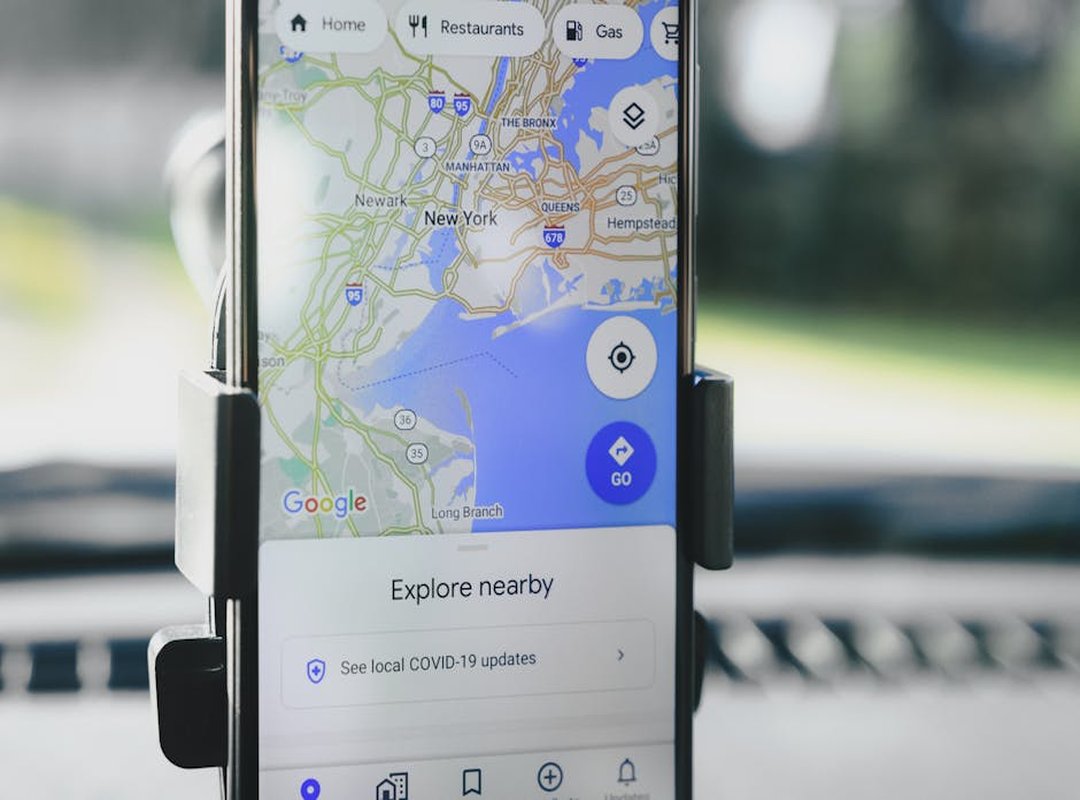
I use FM maps to solve actual problems. Not to stare at pretty colors.
Want the best antenna spot? Step 1: Open a map for your target station. Step 2: Drop your address pin.
Step 3: Read the dBu value (compare) it to your radio’s minimum (check the manual, not the box). If it’s 20 dBu and your radio needs 25, that corner of the roof won’t cut it.
Thinking about moving? Pull up maps for three stations you actually listen to. Not the top 40 list.
The ones you rely on. See where coverage dips below 35 dBu. That gap means dead air during storms.
Food truck owner? Map signal strength near your usual spots. A weak 98.5 FM in downtown means skip the jingle (go) digital instead.
Schools and fire departments cross-check maps during outages. One map says “full coverage”, another shows a 12-mile hole. You don’t bet lives on one source.
Time-of-day filters? Most people ignore them. But nighttime skywave bounce on 700 (1600) kHz can flip your coverage entirely.
Try it after dark.
Lwmfmaps are useful (but) only if you treat them like a tool, not gospel.
Cross-reference. Always.
Free FM Maps: Which Ones Actually Work?
I’ve wasted hours on fake “free” map sites. You click Free Map and get a paywall, a redirect, or worse. A pop-up that hijacks your browser.
FCC’s FM Query is raw. No visuals. Just data.
Enter a call sign, click Coverage Map, pick Longley-Rice, download the KML. It’s accurate. But you’ll need QGIS or Google Earth to open it.
(Not everyone wants to install GIS software just to see where a signal reaches.)
Radio-Locator looks clean. It’s easy. But it simplifies terrain too much.
If you’re mounting an antenna on a hillside? Don’t trust it alone.
The VHF/UHF Propagation Tool uses real elevation data. You feed in coordinates, antenna height, power (and) it models how radio waves bend over hills and buildings. It’s harder to use.
But it’s right more often.
RTL-SDR community maps are crowdsourced. Real people with real dongles verify coverage. They’re messy.
Inconsistent. But when they match FCC data? That’s when I believe it.
Always cross-check. Use at least two sources before buying an antenna or picking a studio site.
Lwmfmaps? Skip it. No documentation.
No source credits. Just vague colors and a download button.
Pro tip: Save every map as a PDF with scale bar and date stamped. Permits love that. So do I.
You already know which one’s wrong. Which one’s missing?
Your Next Clear Signal Starts Here
I’ve watched people chase perfect coverage maps for years. They trust the colors. They ignore the hills.
They get static instead of music.
You’re tired of guessing. Tired of driving blind into dead zones. Tired of buying gear that should work (but) doesn’t.
Lwmfmaps only help when you pair them with terrain and real-world tests. Not theory. Not marketing.
Just your radio, your location, and five minutes tomorrow.
Pick one spot you care about. Home. Work.
That weird stretch on your commute. Pull up the FCC map. Note the dBu value.
Then test it—tomorrow. With your actual radio.
That mismatch? That’s where your signal clarity begins.
Your next clear signal starts with the right map (not) the prettiest one.

 As an author at TravelBeautyVision.com, Roberter Walkerieser focuses on uncovering the beauty of global destinations through insightful narratives. His writing style combines creativity and technology, helping readers connect with places in a more engaging way.