
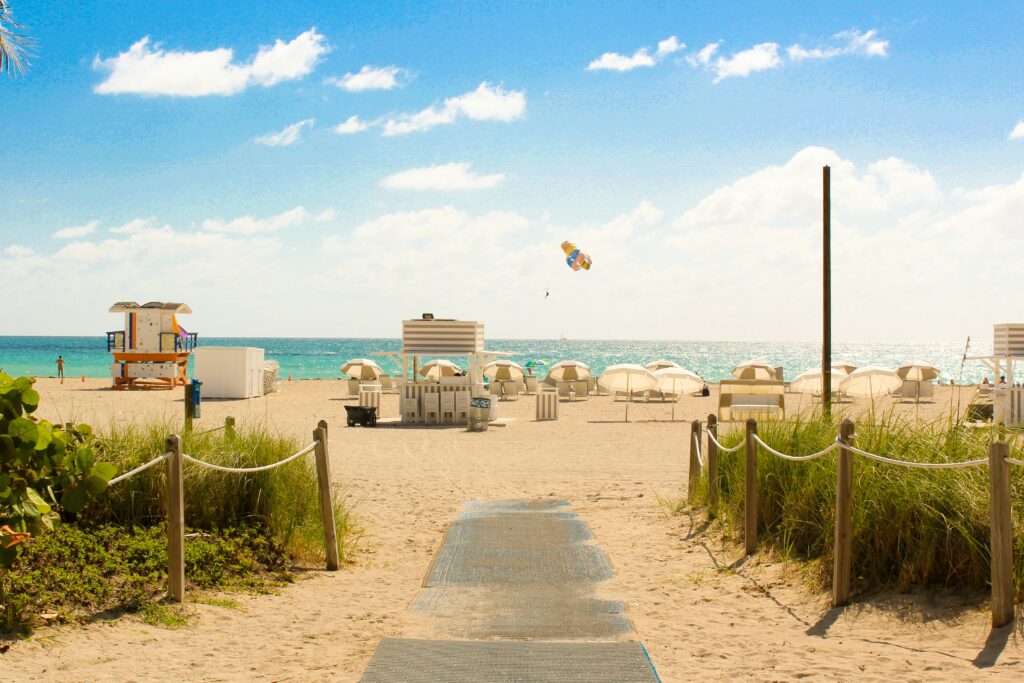
When planning coast-to-coast beach vacations, the two destinations that dominate American travelers’ wish lists are California and Florida. Both states offer stunning coastlines, warm hospitality, and unforgettable experiences, but they deliver those things in very different ways.
Key Takeaways
- California beaches tend to offer cooler water temperatures and dramatic scenery, while Florida beaches feature warmer Gulf and Atlantic waters ideal for swimming year-round.
- Florida generally offers a lower overall cost of travel compared to California, making it a popular choice for budget-conscious families.
- California shines for outdoor adventurers who want hiking, surfing, and coastal road trips alongside their beach time.
- Florida’s flat, wide beaches and calm Gulf waters make it the top pick for families with young children.
- Both states have distinct peak seasons: Florida sees its busiest stretch in winter and spring, while California draws the biggest crowds in summer.
- Choosing the right rental property in either state can dramatically shape your overall vacation experience.
Climate and Water Conditions: A Tale of Two Coasts
One of the biggest differences between a California and a Florida beach vacation comes down to the water itself. California’s Pacific Ocean stays noticeably cooler throughout the year, averaging around 60 to 65°F even during peak summer months in most regions. That’s refreshing if you’re surfing in a wetsuit, but it can be a shock for families expecting to splash freely with young kids.
Florida’s situation is almost the opposite. The Gulf of Mexico routinely reaches 85°F or warmer during summer, and even the Atlantic side of Florida stays swimmer-friendly from April through October. If warm-water swimming is your priority, Florida has a clear edge.
California’s coastal climate also brings the famous “June Gloom,” a marine layer that blankets beaches in morning fog during early summer. Southern California, particularly around Santa Monica and Malibu, often doesn’t see sunshine until early afternoon in June and July. Meanwhile, Florida’s summer brings reliably sunny mornings, though afternoon thunderstorms are a daily ritual from June through September.
For travelers who value predictable sunshine and warm water without the guesswork, Florida tends to win on pure beach-day reliability.
Costs and Accommodations Across Both States
Your travel budget will look very different depending on which coast you choose. California beach towns, especially places like Santa Barbara, Laguna Beach, and Carmel-by-the-Sea, carry some of the highest accommodation costs in the country. A mid-range beachside rental during peak summer can easily exceed $400 to $500 per night. Dining out, parking, and activities add up fast.
Florida offers a broader range of price points. While luxury properties in Naples, Destin, and Miami’s South Beach can match or exceed California rates, you’ll also find comfortable, well-located rentals in spots like the Panhandle or the Space Coast that deliver genuine value. Platforms that specialize in curated Florida beach rentals make it easier to find properties positioned directly on the sand, cutting out the need for a car to reach the beach each morning.
California’s cost of living ripples into every aspect of travel. Gas prices in California are among the highest in the nation, which matters since many California beach experiences require driving scenic coastal highways like the Pacific Coast Highway. Florida’s flatter geography and lower fuel costs make it easier to get around without a significant transportation budget.
Families who want to stretch their vacation dollar further without sacrificing beach quality will generally find Florida more accommodating.
Activities and Experiences: More Than Just Sand
Both states offer far more than passive beach time, and the type of traveler you are should heavily influence your choice.
California beaches are woven into a larger tapestry of outdoor adventure. You can surf world-class breaks at Rincon or Mavericks, hike cliff trails in Point Reyes National Seashore, kayak through sea caves near Santa Cruz, or mountain bike on trails that end at ocean overlooks. The Pacific Coast Highway road trip from San Francisco to San Diego remains one of America’s most iconic drives. California also offers proximity to major cities: Los Angeles, San Diego, and San Francisco all sit within easy reach of quality beaches.
Florida, by contrast, is the state for water-based activities in warmer conditions. Snorkeling around the Florida Keys, paddleboarding in the glassy waters of the Gulf Coast, dolphin-watching tours near Clearwater, and airboat rides through the Everglades just south of Miami all offer unique experiences you simply cannot replicate in California. Theme parks are another Florida advantage: Orlando’s major attractions are a two-to-three-hour drive from most Gulf Coast and Atlantic beaches, making a beach-and-parks combo vacation straightforward.
For nightlife and dining culture, both states deliver, but in different registers. California beach towns like Venice Beach or Hermosa Beach have a laid-back, artsy, health-conscious food scene. Florida’s coastal cities, particularly Miami and Fort Lauderdale, offer Latin-influenced cuisine, vibrant nightlife, and a faster social energy.
If your vacation needs to satisfy a group with diverse interests, Florida’s sheer variety of activities in close proximity often gives it the edge. Well-managed hospitality services in Florida’s resort communities also ensure that families and groups get personalized local support throughout their stay, from restaurant recommendations to activity bookings.
Family Suitability and Accessibility
Traveling with children changes the calculus significantly when comparing these two destinations.
Florida’s beaches along the Gulf Coast, particularly in areas like Siesta Key, Clearwater Beach, and Destin, are consistently ranked among the most family-friendly in the nation. The water is shallow for long distances offshore, the sand is fine and soft, and the calm waves keep even the youngest swimmers safe. Lifeguard coverage is robust during peak season, and many beach communities offer dedicated family amenities including playgrounds, restrooms, and picnic areas within steps of the water.
California beaches are spectacular, but they come with caveats for families. Rip currents along the Pacific are more frequent and powerful. Water temperatures discourage younger children from spending extended time swimming. Parking at popular California beaches can involve significant hikes from lot to waterfront, which becomes challenging with strollers and beach gear.
For multigenerational groups or families with children under 10, Florida’s Gulf Coast consistently receives higher marks for ease and safety.
Frequently Asked Questions
Which state has better beaches for swimming?
Florida is generally better for swimming, thanks to warmer water temperatures and calmer surf conditions. The Gulf Coast in particular offers shallow, warm water that stays comfortable for swimmers of all ages. California’s Pacific water is significantly cooler and carries stronger rip currents in many areas.
Is California or Florida more expensive for a beach vacation?
Florida tends to be the more affordable option overall, especially outside of Miami and peak winter season. California beach towns carry higher accommodation, fuel, and dining costs on average, which adds up over a week-long stay. Florida’s range of price points gives budget-conscious travelers more flexibility.
When is the best time to visit California beaches?
Late summer and early fall, specifically August through October, offer California’s most reliable beach weather. The marine fog layer clears by then, temperatures are warm, and crowds begin to thin after Labor Day. June and July can be surprisingly overcast in Southern California due to the marine layer effect.
Are Florida beaches good year-round?
Yes, Florida’s beaches are accessible and enjoyable year-round, though each season has trade-offs. Winter and spring bring cooler temperatures and lower humidity, making them popular with visitors from northern states. Summer brings the warmest water but also afternoon thunderstorms and higher humidity.

































































































































































































































































































































































































































































































































































































































































































































































































































































































































































































































































































































































































 Richard M., author at TravelBeautyVision brings a unique perspective to travel and culture. With a passion for exploring hidden destinations, he blends storytelling with modern digital tools to give readers an authentic journey through his writing.