I’ve spent years staring at blurry map scans.
And I’m sick of it.
You know that feeling (when) you need a specific historical map, and every search gives you pixelated JPEGs or half-loaded archives? Yeah. Me too.
The Map Guide Lwmfmaps fixes that.
It’s not another gallery of pretty thumbnails. It’s a working archive built for people who actually use maps (not) just look at them.
I’ve used it daily for over eight years. Worked with university libraries. Helped students rebuild colonial boundary data.
Found maps others swore didn’t exist.
This guide isn’t theory.
It’s how I get what I need. Fast.
By the end, you’ll know where to click, what to filter, and how to spot the right version the first time. No guessing. No dead ends.
Just the map you want.
Lwmfmaps Isn’t Google Maps in a Turtleneck
Lwmfmaps is a digital library (not) a navigation app. It’s thousands of high-res historical maps, scanned from archives, with clean metadata and zero ads.
I’ve used Google Maps to find coffee. I’ve used Lwmfmaps to trace how the Mississippi River shifted between 1832 and 1874. Different tools.
Different jobs.
It doesn’t route you around traffic. It shows you where traffic didn’t exist yet.
That’s why historians love it. They’re not checking bus times. They’re comparing border treaties from 1919 and 1923 on the same screen.
Zoom in. See the ink smudge. Read the marginalia.
Urban planners use it to see how street grids exploded in Detroit between 1900 and 1930. Genealogists pull land parcel maps from 1887 to confirm where Great-Uncle Eli actually owned that half-acre near Cedar Rapids.
Students? They cite these as primary sources. Not Wikipedia summaries.
The real thing.
The Map Guide Lwmfmaps is the name some call it (but) it’s not a guidebook. It’s raw material.
Lwmfmaps works for:
- Academic Research
- Environmental Studies
- Local History Projects
- Cartographic Preservation
You don’t need GIS training to use it. You do need curiosity about what was there before the highway went in.
Some sites offer map thumbnails. Lwmfmaps gives you the full scan (600) DPI, no watermarks, no paywall after the first click.
I opened a 1943 USGS topo map last week. Found a rail spur that vanished by 1951. That’s not trivia.
That’s evidence.
Try it. Then ask yourself: When was the last time a map made you pause mid-scroll?
The Map Guide Lwmfmaps: What Actually Works
I opened this thing for the first time and felt like I’d walked into a library with no signs.
So let’s cut the noise.
The Digital Collections are massive. Not “big for a website”. Massive.
Topographic maps. Nautical charts. Aerial photos from the 1930s.
Historic city plans where you can see streetcar lines drawn in ink.
Some of it is scanned. Some is georeferenced. Some isn’t (and) that’s fine.
You just need to know which is which before you cite it.
Advanced search? Forget typing “New York.” Use filters instead.
Date range. Location box (not just a name. Drag it).
Map scale. Collection type. I found a 1927 fire insurance map because I filtered for “Sanborn” + “1920. 1930” + “Los Angeles.”
It took 12 seconds.
The Interactive Map Viewer is where people stall.
Zoom works. Pan works. Layer toggles?
Yes (but) only on georeferenced maps. Measurement tools? Only if the map has coordinates baked in.
Metadata appears when you click the “i” icon. Not the map itself. (That tripped me up for way too long.)
Download options are solid (but) pick carefully.
JPG for quick reference. GeoTIFF if you’re loading it into QGIS or ArcGIS. PDF?
Skip it unless you need print layout.
The Map Guide Lwmfmaps isn’t built for casual browsing. It’s built for people who already know what they want (and) need to find it fast.
You can read more about this in Map infoguide lwmfmaps.
I’ve wasted hours on other map sites clicking through thumbnails.
Not here. Filter first. Click second.
You’ll save time. You’ll skip frustration.
And you won’t print a map at the wrong scale again.
(Pro tip: Always check the scale bar before downloading.)
Finding a 1920s Land Use Map: No Guesswork
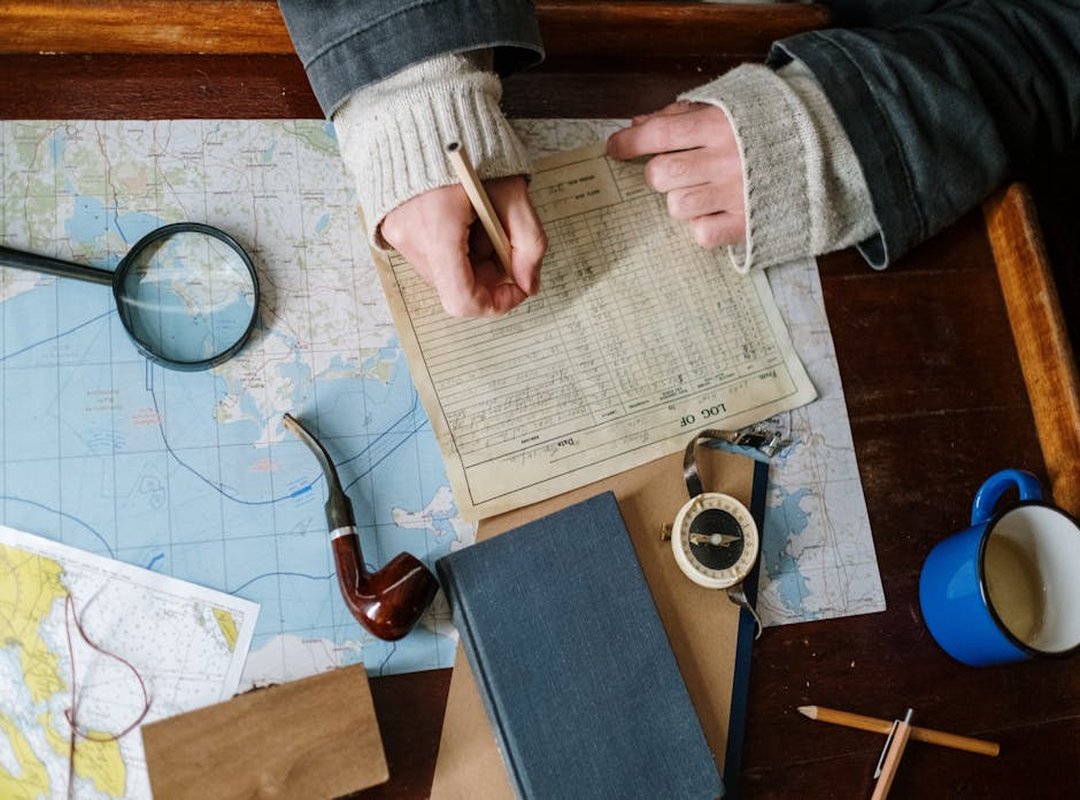
I needed a 1920s land use map of Humboldt County last month. Not just any map. The real one.
With property lines, orchard plots, and rail spurs marked.
You probably need something just as specific.
Start with your search query. Don’t type “old map.” That’s like searching for “old car” when you want a 1923 Ford Model T. Use zoning map + “Humboldt County” + “1920s”.
Add “cadastral” if you know it. (Most people don’t. That’s fine.)
Filters are not optional. They’re your first line of defense against junk results. Turn on the date filter and lock it to 1920. 1929.
Then pick “Cadastral Maps” from the collection menu. Skip the rest.
Now look at the thumbnails. Not the titles. The thumbnails.
Does the grid look crisp? Is there hand-drawn lettering? Does the scale say 1 inch = 400 feet?
That tells you it’s survey-grade, not a tourist pamphlet.
Metadata matters. Click it. If the author is “U.S.
Geological Survey” or “County Engineer’s Office,” that’s solid. If it says “reproduced from postcard,” close the tab.
Open the map in the viewer. Zoom in on the legend first. If it’s missing or smudged, the whole thing’s suspect.
Check for pencil notes in the margins. Those are gold. And look at the scan quality along the edges.
Faded corners mean someone rushed the digitization.
The Map Guide Lwmfmaps helped me spot a mislabeled 1927 plat book that others missed. I found it through the Map infoguide lwmfmaps.
Pro tip: Always download the highest-res version before you start annotating. Some viewers compress on export.
You’ll waste hours otherwise.
Trust the legend. Not the title.
Not the thumbnail.
The legend.
Common Mistakes to Avoid and Pro-Tips for Power Users
I’ve watched people waste hours searching Lwmfmaps with terms like “old map” or “city map.”
That doesn’t work.
Archival platforms reward precision. Try “1924 Portland street map” instead. You’ll get results.
Not noise.
The Compare Maps feature is underrated. Turn it on. Drag a 19th-century map over today’s satellite view.
See where the river shifted. Where streets vanished. (It’s eerie how much changes.)
Citing maps matters. Especially if you’re writing a paper. Use this format: Map Title, Year, Lwmfmaps, accessed [date], [URL].
No fluff. Just facts.
You want deeper guidance? Check out the Travel Guides Lwmfmaps page. It’s the only place I send people who ask, “Where do I even start?”
The Map Guide Lwmfmaps isn’t a toy.
It’s a tool. Use it like one.
You Just Found Your First Real Map
I used to waste hours hunting for a decent map. You probably did too.
The Map Guide Lwmfmaps fixes that. It’s not another cluttered search page. It’s a working archive (organized,) fast, and actually useful.
You already know how to search. Type in your hometown. Try a battlefield.
Look up where your grandparents lived.
No signups. No paywalls. No guessing if the map is even accurate.
Most map sites make you dig through junk or hit dead links. This one doesn’t.
You wanted a map. Not a maze.
Go there now. Search for your place. See how fast it loads.
That first result? That’s the one you’ve been waiting for.
Your turn.
Visit The Map Guide Lwmfmaps and search. Right now.

 As an author at TravelBeautyVision.com, Roberter Walkerieser focuses on uncovering the beauty of global destinations through insightful narratives. His writing style combines creativity and technology, helping readers connect with places in a more engaging way.